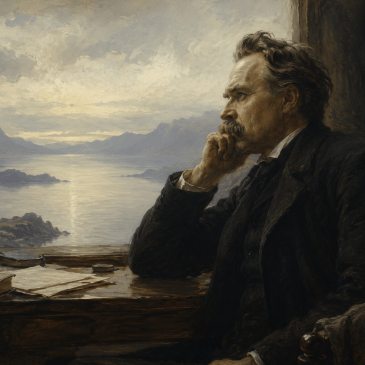
What is a Philosopher

Thus philosophy as phenomenology must begin by a persistent renunciation of all that is taken for granted, including the natural thesis of being-human-in-the-world. It does not deny such existence, or Being for that matter, for such denial (idealism) is itself a taking of a position, a tendency within the natural attitude. Instead, phenomenologizing refrains from any position with regard to reality or unreality, existence or non-existence, of contents of experience; it brackets all matters of existences and instead regards the world as mere phenomenon; it doesn’t buy into its claim of existence, neither does it reject that claim; it remains in the attitude of abstention.  … More What is a Philosopher

Beyond The Shadows: Deciphering The Phenomenological Reduction – Part 1

The things that we experience, including our own human self, its history and its fundamental situatedness within a context, i.e. the world, are nothing but shadows compared to what’s truly real: they derive their sense of Being and reality from something else outside of the cave, from what Fink calls the Light-World. However, being chained to our mundane self-understanding, we falsely attribute reality and existence to these shadow-appearances. We are fundamentally oblivious to the possibility of the true dimension of Being. That’s why Fink argues that insofar as we see and interpret ourselves as humans in the world, we cannot break free from this beginingless imprisonment. Rather, we must turn away from the shadows and step outside the cave, a movement accomplished by the performance of the reduction, and this reduction which is a persistent abstention from belief needs to be performed from a deeper level of self than our human self which itself is nothing but a shadow. … More Beyond The Shadows: Deciphering The Phenomenological Reduction – Part 1