When the World Becomes Transparent: Phenomenological Reduction as the Breakthrough into Transcendental Dimension of Being

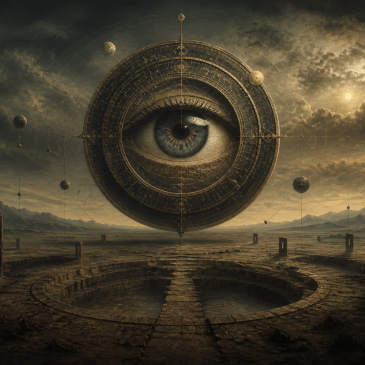
The phenomenological reduction is often mistaken for a philosophical technique or intellectual exercise. Yet, at its deepest, it is an awakening, a breakthrough from our immersion in the obviousness of the world into the ever-hidden dimension of transcendental life. The world does not vanish; rather, it becomes transparent, revealing itself as an ongoing accomplishment of consciousness. What remains is not certainty, but wonder before the mystery that makes all appearing possible. … More When the World Becomes Transparent: Phenomenological Reduction as the Breakthrough into Transcendental Dimension of Being

The Anonymous Life of Consciousness: Toward a Transcendental Seeing

Everything that appears passes away, yet within the flux of appearances there shines a meaning that cannot itself be reduced to what appears. The structures that make experience possible, time, intentionality, Being, and the elusive “I”, do not stand before us as objects but remain concealed within the very act of disclosure. Their nature is to give themselves ambiguously, forever grounding experience while escaping complete capture by thought. What follows is not an attempt to explain these mysteries, but to point toward the anonymous source from which all meaning and worldhood arise. … More The Anonymous Life of Consciousness: Toward a Transcendental Seeing

Reflections on The Nature of Reality

The quality of reality seems to have been mixed up with the objects of experience; we attribute the quality of reality to them, but upon further investigation we could see that it cannot depend on objects because this quality, or its magnitude if you will, remains the same; it is formless. As in a projection on the screen, both the projection and the screen seem to coincide, but the reality of the screen is distinct from that of the film and the events in it. The screen is not something in the film, but it must be there and become anonymous for us to be able to experience the film. … More Reflections on The Nature of Reality

The Seer Has All The Answers

To pull oneself out from a beginningless enchantment that’s called the world! This enchantment is the humanness. To be human, to experience oneself as such, is to be entrenched in enchantment; it is God in trance! Distinction, separation, to have a place, to have time, the duality of the reflected and the reflection, all are dances of longing. There is no motion where there is no where to move.  … More The Seer Has All The Answers

Against the Dead World: An Essay on Meaning, Myth, and the Crime of Taking the Map for the Living Land

We were not born into a dead world. We were born into a living stream of meaning, and only later taught to mistake its shadow for reality. The world handed to us by scientism is neat and measurable, but at once an utterly lifeless picture framed so tightly that the pulse of Being can no longer be felt within it. And yet we are asked to live there, to love there, to find meaning there.

This essay is a refusal. A refusal to take the model for the living, the map for the land, the shadow for the flame. It is an invitation to reclaim what was never lost but merely loaned out, the living flow of meaning itself, from which all pictures borrow their meanings and by which alone anything is ever real. … More Against the Dead World: An Essay on Meaning, Myth, and the Crime of Taking the Map for the Living Land

The Mirror, the Man, and the Divine

If only you could zoom out enough to see the camera rolling, the setup and the stage and the props that you call your life and your possessions—that’s the true freedom: to see that all is already done and unified, that nothing needs to be done, that no one and nothing is out there, even the “out there” isn’t out there. Nothing was ever created, as there was never a need for it. Only then it’s recognized that the new man was the only man. … More The Mirror, the Man, and the Divine

Beyond The Shadows: Deciphering The Phenomenological Reduction – Part 2

What makes the phenomenological reduction unique, is that it’s not a suspension of an act or cluster of acts in favor of living in some other acts; it’s rather a total and complete suspension or putting out of play of all acts or all manners of being directed toward meanings through the stream of consciousness. It is unique both in its universality and its peculiar directionality: everything is suspended by an abrupt move toward the center of consciousness, the pure I, which will bring to view the total streaming consciousness. The phenomenological reduction is, as Fink has said, a persistent abstention from any participation in the stream of consciousness by making the streaming itself the theme, a streaming that throughout human history has always remained un-thematic and un-discovered for necessary reasons. To perform the reduction is to see the streaming, the Heraclitean flux, for the first time. … More Beyond The Shadows: Deciphering The Phenomenological Reduction – Part 2

Beyond The Shadows: Deciphering The Phenomenological Reduction – Part 1

The things that we experience, including our own human self, its history and its fundamental situatedness within a context, i.e. the world, are nothing but shadows compared to what’s truly real: they derive their sense of Being and reality from something else outside of the cave, from what Fink calls the Light-World. However, being chained to our mundane self-understanding, we falsely attribute reality and existence to these shadow-appearances. We are fundamentally oblivious to the possibility of the true dimension of Being. That’s why Fink argues that insofar as we see and interpret ourselves as humans in the world, we cannot break free from this beginingless imprisonment. Rather, we must turn away from the shadows and step outside the cave, a movement accomplished by the performance of the reduction, and this reduction which is a persistent abstention from belief needs to be performed from a deeper level of self than our human self which itself is nothing but a shadow. … More Beyond The Shadows: Deciphering The Phenomenological Reduction – Part 1