Reflections on The Nature of Reality

The quality of reality seems to have been mixed up with the objects of experience; we attribute the quality of reality to them, but upon further investigation we could see that it cannot depend on objects because this quality, or its magnitude if you will, remains the same; it is formless. As in a projection on the screen, both the projection and the screen seem to coincide, but the reality of the screen is distinct from that of the film and the events in it. The screen is not something in the film, but it must be there and become anonymous for us to be able to experience the film. … More Reflections on The Nature of Reality

Samsara is Nirvana

A reflection on the illusion of separateness: the world we chase is shaped by our own ideas, and the self we cling to is only a layer over something deeper. What we call personality, desire, and even reality are constructions laid upon a more fundamental awareness. Peace doesn’t come from fixing the world or acquiring more—it comes from seeing through the ideas that bind us and recognizing that we are already whole, already the ground from which all experience arises. … More Samsara is Nirvana

The Origins of Objectivity: World as an end product of subjective constitution

The world is a world of appearances; there is nothing out there behind appearances; all Being and actuality and reality is on the Subject side of experience and not on the object side. The Being and reality of the world is the reality of the Subject that is falsely attributed to a thing out there, a logically meaningless notion upon reflection. Out where? Are not out and there both meanings experienced and made sense within consciousness!  … More The Origins of Objectivity: World as an end product of subjective constitution

Against the Dead World: An Essay on Meaning, Myth, and the Crime of Taking the Map for the Living Land

We were not born into a dead world. We were born into a living stream of meaning, and only later taught to mistake its shadow for reality. The world handed to us by scientism is neat and measurable, but at once an utterly lifeless picture framed so tightly that the pulse of Being can no longer be felt within it. And yet we are asked to live there, to love there, to find meaning there.

This essay is a refusal. A refusal to take the model for the living, the map for the land, the shadow for the flame. It is an invitation to reclaim what was never lost but merely loaned out, the living flow of meaning itself, from which all pictures borrow their meanings and by which alone anything is ever real. … More Against the Dead World: An Essay on Meaning, Myth, and the Crime of Taking the Map for the Living Land

A Home Built on Quicksand

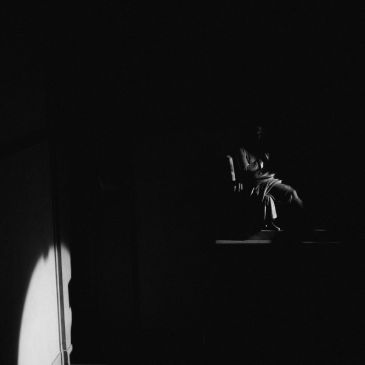
In the dim halo around Babushka’s rocking chair, a man pleads for a single nod that will never come. His monologue drifts between heartbreak and the deeper terror of becoming irrelevant in a universe that refuses to speak. What unfolds is not a search for comfort but a confrontation with silence itself—the kind that swallows every question and leaves a man facing the truth that meaning is never given, only begged for, and rarely received. … More A Home Built on Quicksand

La Fretta dell’Essere: L’uomo e il miraggio del “Là”

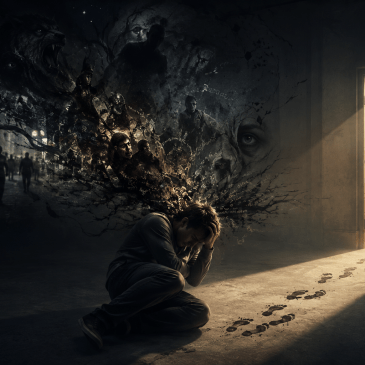
What is man as a phenomenon? Is he a being that’s hasting toward non-being, a ghostly figure that has projected all the being he has and he can’t tolerate into and beyond a non-being horizon? Nay. Man is nothing in haste. Man is the very hasting of Being; he is hasting itself and not a being in haste. That’s why he’s always torn, torn in between here and there, for he can’t get that there out of his stupid head. He is as horizontally stretched between the opposite poles of embodiment and self-abandonment as he is vertically stretched between heaven and hell. He is everywhere and everywhen but here and now. He is a lunatic chasing shadows of himself.   … More La Fretta dell’Essere: L’uomo e il miraggio del “Là”

The Letter That Kills, the Song That Heals: When Reality Is Buried Alive in Much Intellectual Chatter

We must forget and unsee all that we know and all that we think. We must surrender who we think we are in order to see who we truly are. We must surrender what we think reality is in order to see it for what it truly is. And repetition itself can help us: to repeatedly put the headsets aside, to return again and again to the plain, unadorned real, even when it feels empty or dull. That emptiness and dullness and boredom is the withdrawal symptom of a lifelong addiction to conceptualization and repetitive thinking. Stay with that emptiness long enough and one day vision clears. But for that, all borrowed images must die. All the stories of philosophers, theologians, and scientists must vanish for the true sun to rise before our eyes. All our ideas of truth and reality must die for the One to appear. … More The Letter That Kills, the Song That Heals: When Reality Is Buried Alive in Much Intellectual Chatter