Samsara is Nirvana

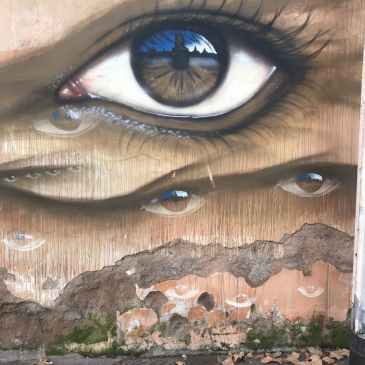
A reflection on the illusion of separateness: the world we chase is shaped by our own ideas, and the self we cling to is only a layer over something deeper. What we call personality, desire, and even reality are constructions laid upon a more fundamental awareness. Peace doesn’t come from fixing the world or acquiring more—it comes from seeing through the ideas that bind us and recognizing that we are already whole, already the ground from which all experience arises. … More Samsara is Nirvana
The Origins of Objectivity: World as an end product of subjective constitution

The world is a world of appearances; there is nothing out there behind appearances; all Being and actuality and reality is on the Subject side of experience and not on the object side. The Being and reality of the world is the reality of the Subject that is falsely attributed to a thing out there, a logically meaningless notion upon reflection. Out where? Are not out and there both meanings experienced and made sense within consciousness!  … More The Origins of Objectivity: World as an end product of subjective constitution

The Nauseating Discomfort of Facing Core Stories

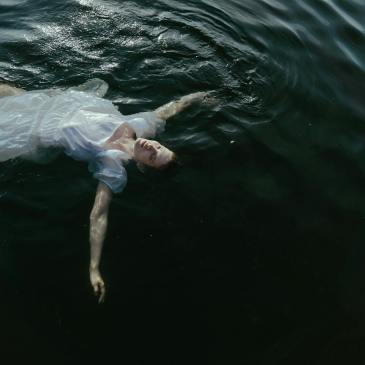
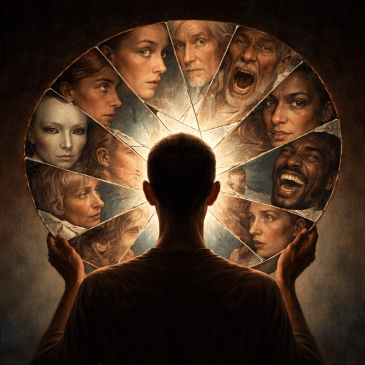
But who came first? I or the story? Who’s the storyteller, and who is the listener? What do you believe deep down? What do you hold true about yourself? And what’s the origin of these truths? And who verified them and gave them the status of truth? What if none is true? What if I float? What if the water is murky! What if I drift away, hit something, or be bit by a surprise! … More The Nauseating Discomfort of Facing Core Stories

Socrates as Antidote: Against Borrowed Truths and Moral Posturing

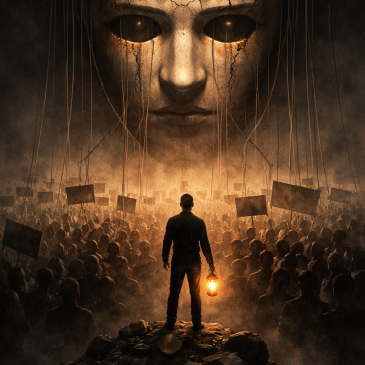
The sickness of our age is not ignorance but borrowed conviction. We repeat slogans, cheer polished speeches, and mistake volume for truth, all while refusing to examine the roots of what we claim to stand for. Real dignity begins when a person turns inward, tests their own beliefs, and takes responsibility for them instead of hiding inside the safety of the crowd. … More Socrates as Antidote: Against Borrowed Truths and Moral Posturing

American Cheese and the Ontology of Attention

I once learned at the vet that a slice of American cheese could make a hated nail-clipping practically disappear for my dog. That small trick opened a larger question: can something be said to “exist” if it no longer stands out in consciousness? From Leroy to Kant, from metaphysics to everyday anxiety, this piece explores a blunt possibility, that many of our “situations” survive only by the oxygen of our attention. Shift the beam, and the monster fades. Not by force, but by redirection. … More American Cheese and the Ontology of Attention

To Own the Meaning of One’s Being

The higher type is the one who stops borrowing meaning and starts creating it. Where the last man accepts ready-made interpretations—whether from myth, religion, or science—he recognizes them as constructs sustained by belief. Freedom begins when he sees the walls were never walls, only consent. From that point on, he takes full responsibility for the meaning of his own being, shaping himself through action rather than hiding behind inherited definitions. … More To Own the Meaning of One’s Being

The Rise of The Animator

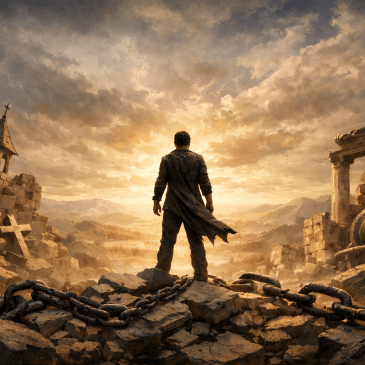
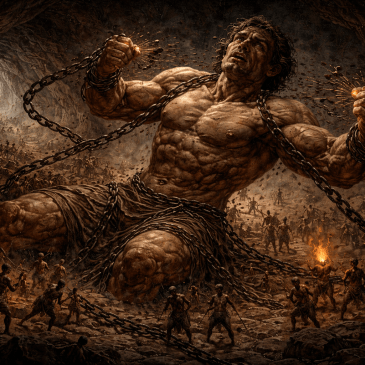
A world of flattened meanings, inherited veils, and mechanical comforts has chained what is most alive in us. Yet the spirit that was buried is not dead, only dormant. Its pulse is returning, its gaze reopening. What rises now cannot be contained by ideology, reduced to concepts, or negotiated with by the last man. The cycle is turning. Those who can still hear will feel the chains break, not outside, but within, and know that the resurrection of meaning has already begun. … More The Rise of The Animator

Against the Dead World: An Essay on Meaning, Myth, and the Crime of Taking the Map for the Living Land

We were not born into a dead world. We were born into a living stream of meaning, and only later taught to mistake its shadow for reality. The world handed to us by scientism is neat and measurable, but at once an utterly lifeless picture framed so tightly that the pulse of Being can no longer be felt within it. And yet we are asked to live there, to love there, to find meaning there.

This essay is a refusal. A refusal to take the model for the living, the map for the land, the shadow for the flame. It is an invitation to reclaim what was never lost but merely loaned out, the living flow of meaning itself, from which all pictures borrow their meanings and by which alone anything is ever real. … More Against the Dead World: An Essay on Meaning, Myth, and the Crime of Taking the Map for the Living Land