
Pathless Journey
1 Sep 2026
Resistance and contraction are the principles of appearance. When not even a muscle twitches, things are realized to be here rather than out there. … More Pathless Journey
Resistance and contraction are the principles of appearance. When not even a muscle twitches, things are realized to be here rather than out there. … More Pathless Journey
How disturbing and gut-wrenching, to find no tongue of one’s own in the midst of life, to realize that in one’s supposed home, one has been living as a guest and driven by invisible forces and subliminal cues, the so believable patriarchs with obscure figures and convincing whispers, the echoes of the old! With all … More The Null

Every experience unfolds in layers. What begins as a simple sensation gradually becomes a feeling, a meaning, a story, and finally a behavior. Most of our suffering does not arise from reality itself but from the layers the mind builds upon it. By learning to recognize this process, we can begin to respond to life directly instead of being driven by old patterns that seek to resolve an inner tension. … More The Layers of Lived Reality: from Sensations to Behavior

The phenomenological reduction is often mistaken for a philosophical technique or intellectual exercise. Yet, at its deepest, it is an awakening, a breakthrough from our immersion in the obviousness of the world into the ever-hidden dimension of transcendental life. The world does not vanish; rather, it becomes transparent, revealing itself as an ongoing accomplishment of consciousness. What remains is not certainty, but wonder before the mystery that makes all appearing possible. … More When the World Becomes Transparent: Phenomenological Reduction as the Breakthrough into Transcendental Dimension of Being

Everything that appears passes away, yet within the flux of appearances there shines a meaning that cannot itself be reduced to what appears. The structures that make experience possible, time, intentionality, Being, and the elusive “I”, do not stand before us as objects but remain concealed within the very act of disclosure. Their nature is to give themselves ambiguously, forever grounding experience while escaping complete capture by thought. What follows is not an attempt to explain these mysteries, but to point toward the anonymous source from which all meaning and worldhood arise. … More The Anonymous Life of Consciousness: Toward a Transcendental Seeing

Thus philosophy as phenomenology must begin by a persistent renunciation of all that is taken for granted, including the natural thesis of being-human-in-the-world. It does not deny such existence, or Being for that matter, for such denial (idealism) is itself a taking of a position, a tendency within the natural attitude. Instead, phenomenologizing refrains from any position with regard to reality or unreality, existence or non-existence, of contents of experience; it brackets all matters of existences and instead regards the world as mere phenomenon; it doesn’t buy into its claim of existence, neither does it reject that claim; it remains in the attitude of abstention. … More What is a Philosopher

The quality of reality seems to have been mixed up with the objects of experience; we attribute the quality of reality to them, but upon further investigation we could see that it cannot depend on objects because this quality, or its magnitude if you will, remains the same; it is formless. As in a projection on the screen, both the projection and the screen seem to coincide, but the reality of the screen is distinct from that of the film and the events in it. The screen is not something in the film, but it must be there and become anonymous for us to be able to experience the film. … More Reflections on The Nature of Reality
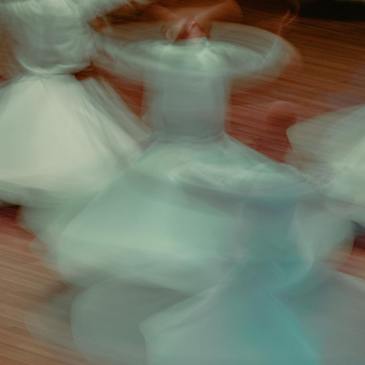
The now is a whirling Dervish; it whirls and it worlds. The Dervish sees; the Dervish sees, A seeing that hides; a seeing that shows, A seeing that holds; a seeing that lets go, One veils; one unveils, One is the farthest; one is the nearest, One is the eye; one is the I. But, alas, … More The Ecstasy of the Self, and World as Hearsay

Choose your company wisely, people, places, and things, because the soul takes the shape of its surroundings. You don’t fight demons forever; many disappear the moment you change altitude. What feels like a flaw is often a signal of misalignment. Trust that signal. Raise the plane, and the noise fades. … More Change the Altitude, Not the Fight: Why your surroundings shape your spirit—and how alignment ends battles you were never meant to fight

Some encounters do not happen in time or circumstance, but in meaning. Two lives cross, and suddenly the past rearranges itself, as if it had been waiting all along for this meeting to occur. What once seemed accidental reveals its pattern, and life awakens from a long, quiet sleep into coherence. … More Rendezvous in the Space of the Heart

