Which Came First: Consciousness or the World?

To say that matter preceded consciousness is already to speak from within consciousness. The claim itself is not matter, not solidity or extension, but a thought—an event of awareness. Thus, the very gesture of asserting matter’s primacy undermines itself, for what appears as primary is already secondary to the condition that allows it to appear at all. Consciousness is not a thing among things; it is the openness in which “thingness” itself becomes possible. It is not contained by the world, but rather the world is contained in it as appearance, as meaning. … More Which Came First: Consciousness or the World?

Beyond The Shadows: Deciphering The Phenomenological Reduction – Part 2

What makes the phenomenological reduction unique, is that it’s not a suspension of an act or cluster of acts in favor of living in some other acts; it’s rather a total and complete suspension or putting out of play of all acts or all manners of being directed toward meanings through the stream of consciousness. It is unique both in its universality and its peculiar directionality: everything is suspended by an abrupt move toward the center of consciousness, the pure I, which will bring to view the total streaming consciousness. The phenomenological reduction is, as Fink has said, a persistent abstention from any participation in the stream of consciousness by making the streaming itself the theme, a streaming that throughout human history has always remained un-thematic and un-discovered for necessary reasons. To perform the reduction is to see the streaming, the Heraclitean flux, for the first time. … More Beyond The Shadows: Deciphering The Phenomenological Reduction – Part 2

Beyond The Shadows: Deciphering The Phenomenological Reduction – Part 1

The things that we experience, including our own human self, its history and its fundamental situatedness within a context, i.e. the world, are nothing but shadows compared to what’s truly real: they derive their sense of Being and reality from something else outside of the cave, from what Fink calls the Light-World. However, being chained to our mundane self-understanding, we falsely attribute reality and existence to these shadow-appearances. We are fundamentally oblivious to the possibility of the true dimension of Being. That’s why Fink argues that insofar as we see and interpret ourselves as humans in the world, we cannot break free from this beginingless imprisonment. Rather, we must turn away from the shadows and step outside the cave, a movement accomplished by the performance of the reduction, and this reduction which is a persistent abstention from belief needs to be performed from a deeper level of self than our human self which itself is nothing but a shadow. … More Beyond The Shadows: Deciphering The Phenomenological Reduction – Part 1

Exploring the Depths of Consciousness: Edmund Husserl’s Natural Attitude versus Phenomenological Attitude

In performing the phenomenological reduction, phenomenology challenges our assumptions about an objective reality external to consciousness. Instead, it reveals a dynamic and mutually dependent interplay between the subject and the world, with the lifeworld serving as the shared horizon of our collective experiences. In adopting the phenomenological attitude, we embark on a journey that transcends the mundane and unveils the profound mysteries of consciousness, inviting us to explore the depths of our subjective worlds and the interconnectedness that binds us all. In the final analysis, a successful entry into the phenomenological attitude coincides with the realization that while as empirical egos we appear to be living in the world, as transcendental ego, it is the world that lives within us, a world that is constantly constructed and simultaneously lived as the field of play for consciousness itself. … More Exploring the Depths of Consciousness: Edmund Husserl’s Natural Attitude versus Phenomenological Attitude

Phenomenological Reduction: A Way To Transcend the World

In performing the Phenomenological Reduction, we do not deny the existence of the world and hour human cover but rather get to see them as what they are, as a persistent Heraclitean flux of appearances that contain within them being-sense, the sense of independent existence, which we simply have accepted and are captivated by them through this acceptedness. As Fink says in CM, “in actuality the world just is not, what alone is is only transcendental subjectivity and its constitutive life, the life of performing acts of meaning.” … More Phenomenological Reduction: A Way To Transcend the World

The Shadow of The Philosopher

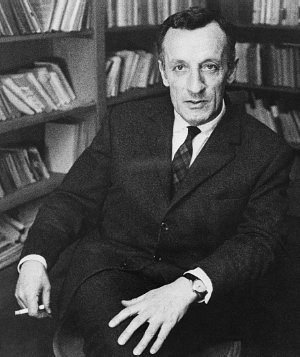
Maurice Merleau-Ponty was a French phenomenologist of the highest rank. Phenomenology as founded by Edmund Husserl and defined by him as “The return to things themselves” preserved its original strength and intention only in the philosophy of Merleau-Ponty, while others such as Martin Heidegger and Hannah Arendt, though offered important and enlightening phenomenological researches, eclipsed the … More The Shadow of The Philosopher